Your First Month with CBD: A Measured Four-Week Dosage Diary
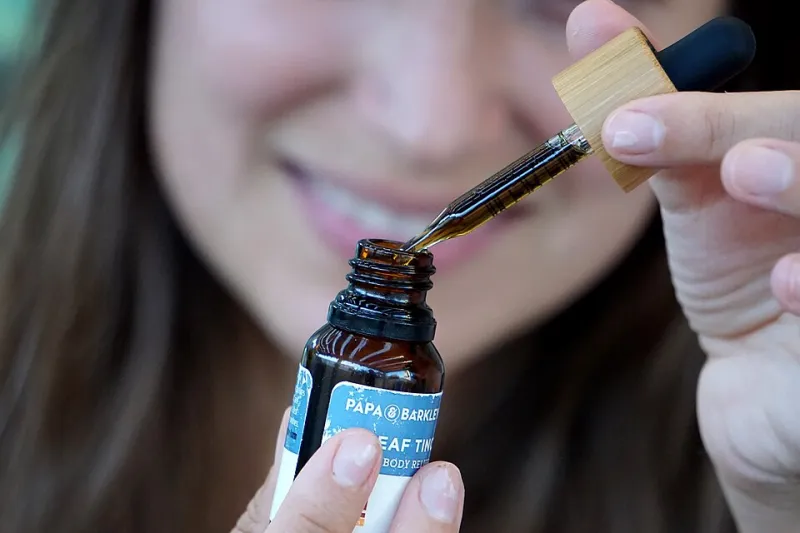
Photo: elsaolofsson, CC BY 2.0, via Wikimedia Commons
Starting CBD for the first time is less about finding a 'correct' dose than about finding a careful starting point. UK labels can be confusing, online claims about absorption are inconsistent, and individual responses vary. A written diary will not turn CBD into a predictable medicine, but it can stop you from changing too many things at once. This four-week structure is designed for that purpose: low, steady and reviewable.
Percentage strength versus total milligrams
A bottle marked 10% CBD usually contains 100 mg of CBD per millilitre. In a 10 ml bottle, that is 1,000 mg in total. A 5% oil would be 50 mg per millilitre, and a 10 ml bottle would contain 500 mg. The percentage tells you concentration; the total milligrams tell you how much is in the bottle; the serving size tells you how much you are taking. All three matter. A high-strength bottle is not automatically a high dose if you use only a small measured amount, and a low-strength bottle can still deliver a large dose if you take several millilitres.
Measuring a consistent serving
Use the dropper that comes with the product. Check whether it is marked in millilitres or drops, and note that dropper sizes vary between brands. A common 1 ml dropper may deliver around 20 drops, but this is not universal. If you want a small starting serving, calculate from the label rather than guessing. For example, a 10% oil contains 100 mg/ml; if your dropper is 1 ml and you take 0.1 ml, you are taking about 10 mg. If the dropper is marked in drops, count them consistently and write down the count. Keep the bottle upright, use the same oil each time, and avoid switching products mid-week.
Why absorption claims vary
Labels and websites often refer to bioavailability, water solubility, particle size or 'enhanced absorption'. These claims are not standardised across the UK CBD market, and the evidence base is uneven. Absorption can be influenced by the carrier oil, the formulation, whether the product is swallowed or held under the tongue, and by individual factors such as digestion and metabolism. That is one reason a dose that suits one person may not suit another. Treat bold absorption claims as marketing until you have independent, product-specific evidence.
A four-week diary structure
Use a notebook or a printed sheet. Record the date, time, product name, strength, amount taken, method and any effects you notice. Keep the first week deliberately simple: choose a low serving, take it at the same time each day, and do not add other new supplements. In week two, repeat the same serving. In week three, consider a small adjustment only if you have a clear reason and no unpleasant effects. In week four, review the pattern rather than chasing a dramatic result.
| Week | Aim | What to record |
|---|---|---|
| 1 | Establish a low, fixed serving | Time, amount, sleep, appetite, mood, any side effects |
| 2 | Repeat without changing | Same fields, plus anything unusual |
| 3 | Adjust only if needed | Reason for change, new amount, effects over several days |
| 4 | Review and decide | Overall pattern, cost, whether to continue or stop |
Reading the diary without over-interpreting
Small day-to-day changes are normal. A better night's sleep or a slightly calmer afternoon may have many causes. Look for repeated patterns across several days, not a single good or bad entry. If you feel drowsy, dizzy or unwell, stop and seek advice. Do not use the diary to justify repeated increases; the aim is to find the lowest amount that seems useful to you, or to conclude that CBD is not for you.
Safety and clinician conversations
CBD can interact with some medicines, and its effects during pregnancy and breastfeeding are not established. If you take prescription medication, have liver problems or are due surgery, speak to a pharmacist or clinician before starting. This diary is an organisational tool, not medical advice. In the UK, a pharmacist can be a good first port of call for interaction questions. Keep your product label and diary with you if you seek advice.
A sensible first month
The useful habits are unglamorous: read the milligrams, measure consistently, change one variable at a time and write it down. A four-week diary gives you a record you can discuss with a clinician and a clearer basis for deciding whether the product is worth continuing. Start low, go slow, and let the pattern emerge.