The Appointment Conversation: Raising CBD with Your GP or Pharmacist Calmly

Photo: U.S. Navy photo by Mass Communication Specialist 2nd Class Gina Wollman, Public domain, via Wikimedia Commons
CBD is widely sold in the UK as a food supplement rather than a licensed medicine, and many people use it alongside prescribed treatment. Raising that with a GP or pharmacist can feel awkward. The evidence base is uneven, product labels vary and appointments are short. Yet a calm, well-prepared conversation is usually more useful than silence. The aim is not to seek permission for a lifestyle product or to ask a clinician to endorse it. It is to make sure that the medicines you take and the CBD product you use are considered together.
Why interactions are worth discussing
CBD is not inert. It can affect liver enzymes involved in the metabolism of some medicines, and it may add to effects such as drowsiness or changes in liver blood tests. Much of the stronger evidence comes from studies of licensed CBD medicines at prescribed doses, or from limited data on specific products. That makes it difficult to predict the relevance for every over-the-counter CBD oil. The risk depends on the medicine, the dose, the person and the product.
Some medicines warrant particular care because small changes in blood levels matter. Others may be less affected. This is exactly the kind of nuance a pharmacist or GP can help you think through. It is also why stopping a prescribed medicine without advice is not a sensible response to a concern about CBD.
Before the appointment: a one-page summary
A short written summary is more useful than a vague recollection. Include:
- All prescription medicines, including doses and times taken.
- Any over-the-counter medicines, supplements or herbal products.
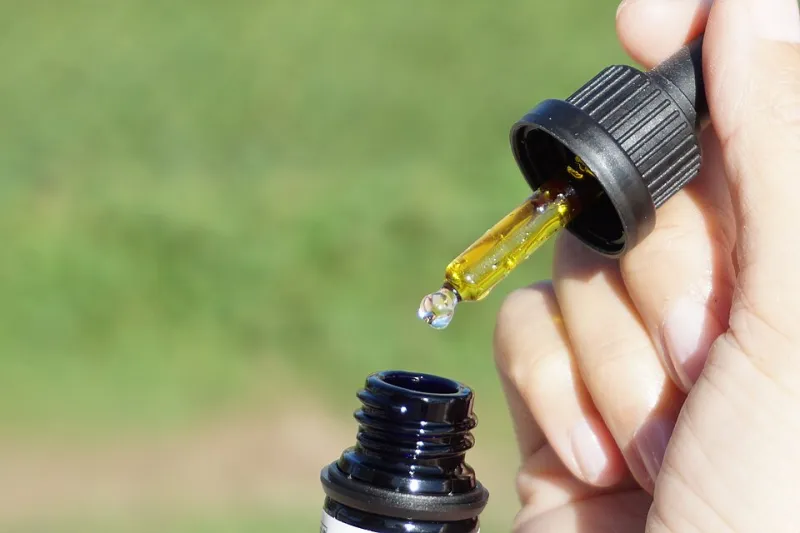
- The CBD product label, including brand, strength per ml or per drop, total CBD content, other cannabinoids listed, carrier oil and batch number if available.
- How much CBD you use, how often and when you started.
- Anything you have noticed since starting, good or bad.
- Relevant conditions, allergies and whether you are pregnant or breastfeeding.
A photograph of the bottle can be helpful, but the label alone may not give a precise dose per drop. If the product states the amount per ml, note how many drops you use and whether you have calculated the approximate amount. Keep the wording factual. The appointment is not the place to resolve every marketing claim on the bottle.
What a pharmacist can check
Pharmacists are well placed to review a list of medicines for potential interactions. They can use interaction resources, consider timing and flag medicines that may need closer attention. They may not have definitive data for a specific CBD oil, particularly where the product has not been studied. A useful pharmacist response may therefore be a careful assessment of theoretical risk rather than a simple yes or no.
A pharmacist can also discuss side effects to watch for, whether a medicine review is sensible and how to report a suspected adverse reaction through the MHRA Yellow Card scheme. If the conversation raises questions that need medical assessment, they can advise you to speak to your GP.
How to phrase the questions
Clear, specific questions tend to work better than broad ones. You could say:
- I use a CBD product alongside my prescribed medicines. Could we review whether there are any interaction concerns?
- I am not asking to change my prescription. I want to make sure I am using this as safely as possible.
- Are there particular side effects I should watch for with this combination?
- Would it be useful to record this in my notes?
- Should I keep a symptom diary, and what would be worth reporting?
- Is there any monitoring you would recommend because of my medicines?
These questions keep the conversation practical. They also make clear that you are not asking the clinician to approve a product or to provide a guarantee that no interaction exists.
What not to expect
A GP or pharmacist may not be able to give a definitive answer. CBD products are not standardised, and research on interactions with unlicensed products is limited. A cautious response is not necessarily a dismissal. It may reflect genuine uncertainty. Equally, a clinician may advise against use in some circumstances, particularly where a medicine has a narrow therapeutic index or where symptoms are complex.
If you notice severe drowsiness, confusion, unusual bleeding, yellowing of the eyes or skin, or any symptom that concerns you, seek urgent medical advice rather than waiting for a routine appointment. This article is general guidance, not medical advice, and it does not replace an individual assessment.
After the appointment
Record what was advised and review it if your medicines change. Keep using the same product where possible, so that any change in symptoms is easier to interpret. If you suspect a side effect, the Yellow Card scheme is the UK route for reporting it. A calm conversation will not remove all uncertainty, but it can turn an awkward subject into a documented, sensible part of your care.