A Calm Walk Down the CBD Aisle: What UK Shops Can and Cannot Prove
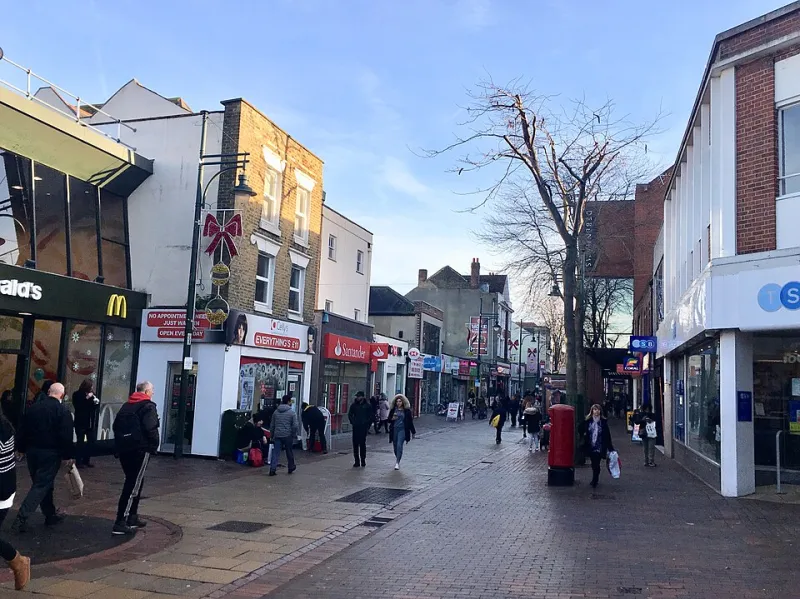
Photo: Chris Whippet , CC BY-SA 2.0, via Wikimedia Commons
The reassurance of a shelf
For many UK shoppers, buying CBD in person feels safer than ordering from an unfamiliar website. There is a building, a member of staff and a product you can hold. That instinct is understandable, but it is worth separating atmosphere from evidence. In 2026, most CBD sold on UK high streets is positioned as a food supplement rather than a medicine. A pharmacy setting does not, by itself, turn a food supplement into a clinically approved product. Licensed CBD medicines exist, but they are prescription-only and intended for specific conditions; they are not the same as the bottles and jars on general sale.
That does not make high-street CBD a poor choice. It simply means the shelf is a starting point, not a conclusion. The useful question is not ‘where am I standing?’ but ‘what can this retailer actually show me about this batch?’
Pharmacies: regulated spaces, variable product knowledge
Pharmacies are used to handling medicines, stock rotation and patient questions. That can be a genuine advantage. Staff are likely to understand expiry dates, storage and the difference between a licensed medicine and a supplement. However, CBD is a small and shifting part of many pharmacy ranges. A pharmacist may be well placed to discuss interactions with prescribed medicines, but they may not have detailed knowledge of every CBD brand’s paperwork.
It is reasonable to ask whether the product appears on the Food Standards Agency’s public novel foods list, whether the batch code is visible, and whether the label states the amount of CBD per serving rather than only per bottle. Do not assume that pharmacy placement implies clinical endorsement. A calm question such as ‘Is this sold as a food supplement, and can you point me to the batch details?’ is more useful than assuming either the best or the worst.
Health food shops: clearer labels, uneven staffing
Health food shops often stock CBD alongside vitamins, herbal teas and free-from foods. Labels tend to be more legible than in some other settings, and staff may be more familiar with ingredient lists, carrier oils and daily serving suggestions. That is helpful for beginners, but it is not a guarantee of quality. Staff knowledge varies widely between branches and between brands.
In this setting, look for the practical basics: a full ingredient list, a clear CBD quantity per drop, capsule or serving, a best-before date, a batch or lot number, and a UK business address. If the product is a tincture, check whether the carrier oil is stated; if it is a capsule, check the serving size. A QR code or web address that leads to batch-specific certificates of analysis is a good sign, but you should still check it later rather than treating the printed code as proof in itself.
Vape retailers: hardware knowledge, different risks
CBD vape products sit in a different cultural aisle. Staff may know a great deal about devices, coils and e-liquids, but that does not always translate into knowledge of CBD dosing or food-supplement compliance. Labels can be colourful and claims can be loose. CBD vape liquids are not medicines, and they should not contain nicotine unless clearly labelled as a nicotine-containing product. If a product’s main selling point is flavour or cloud size, slow down.
Ask for the CBD content per millilitre, the batch number, the best-before date and the company’s UK contact details. Check that the product is sealed and that the label does not make medical claims such as treating anxiety, pain or insomnia. Vaping carries its own respiratory considerations, and CBD does not make that route risk-free. If the retailer cannot answer basic questions about the liquid’s contents, that is useful information.
What you can genuinely verify in store
You can verify that a label exists, that it is legible, that a batch code is printed, that a best-before date is present, and that the seal is intact. You can check whether the stated CBD amount is per serving or per container. You can look for a UK address and a clear ingredient list. You can ask whether the retailer holds batch-specific laboratory reports, though many will not have them at the till.
What you cannot do reliably in store is confirm the product’s full compliance history, the accuracy of its THC statement or the authenticity of a laboratory report. Those checks belong online, after you have noted the brand, product name and batch number. A sensible approach is to treat the shop visit as a first look and the paperwork check as the second.
Questions worth asking, and claims worth ignoring
Useful questions include: ‘Is this product on the FSA novel foods list?’ ‘Can you show me the batch number?’ ‘Is the CBD amount stated per serving?’ ‘Does the label include a THC statement?’ ‘What is the best-before date?’ and ‘What is your returns policy if the seal is broken?’
Be cautious of phrases such as ‘medical grade’, ‘prescriber approved’, ‘guaranteed THC-free’ without documentation, or ‘proprietary blend’ that hides the CBD amount. Personal anecdotes from staff are not evidence. A product that claims to cure or treat a condition is making a medicinal claim that a food supplement should not make. If the label is vague, the batch code is missing, the seal is damaged or the retailer pressures you to buy, walking away is a reasonable and calm decision.
A measured conclusion
The high street offers something valuable: a chance to inspect packaging and ask questions face to face. It does not remove the need for diligence. Use the shop to narrow your choices, then use the product’s paperwork, the FSA list and batch-level information to make the final call. A good CBD purchase is not the one with the most confident shelf talk; it is the one whose details survive a second look.