Two Micrograms and a Roadside Swab: CBD, Driving and the UK Legal Line
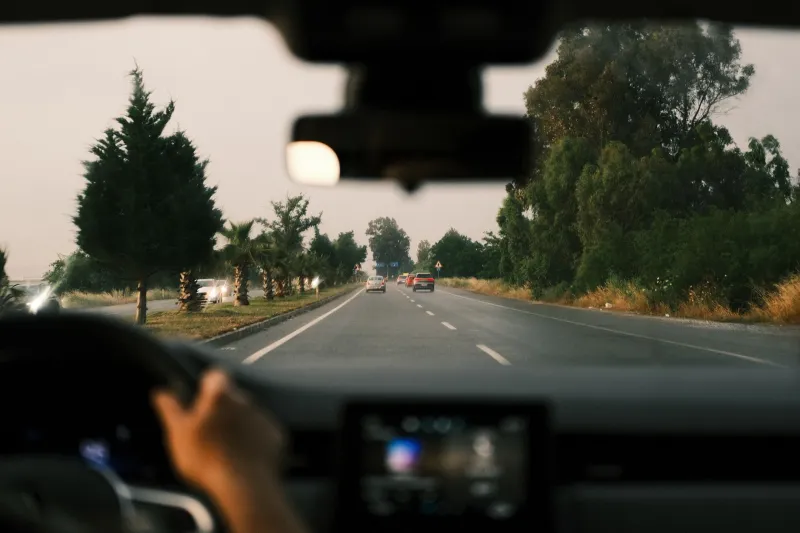
There is a particular kind of quiet that settles over a car when blue lights appear in the mirror. Most drivers assume the conversation that follows will be about speed, a light out, or a phone in a cradle. Increasingly, it can also be about a dropper bottle in the glovebox. This guide is not legal advice, and it is not a promise of safety in either direction. What it aims to do is set out, calmly, what UK law actually says about CBD and driving, where the genuine uncertainties sit, and how to think about timing before you turn the key.
The legal line is drawn in micrograms
Drug-driving in Great Britain is governed chiefly by section 5A of the Road Traffic Act 1988, which makes it an offence to drive, attempt to drive or be in charge of a vehicle with a specified controlled drug above a specified limit in the blood. For THC — delta-9-tetrahydrocannabinol, the principal psychoactive cannabinoid in cannabis — that limit is 2 micrograms per litre of blood in England and Wales. Scotland sets its own, lower figure of 1 microgram per litre, which is worth knowing if you drive north of the border or across it regularly.
Two features of this regime matter for anyone using CBD. First, the limit is expressed in terms of THC. Cannabidiol itself is not a controlled drug under the Misuse of Drugs Act 1971, and it falls outside the Psychoactive Substances Act 2016, which is why it can be sold on the high street at all. Second, and more importantly, section 5A does not require the police to prove that your driving was impaired. Exceeding the limit is the offence. A separate provision, section 4, deals with driving while unfit through drink or drugs, and that one does depend on impairment — but you do not need to be weaving across the central reservation to fall foul of section 5A.
Why even a careful buyer can carry trace THC
CBD products sit on a spectrum. Isolate-based products contain CBD and little else. Broad-spectrum extracts retain other cannabinoids but are typically processed to remove THC. Full-spectrum extracts keep the plant's wider chemistry, which can include small quantities of THC — legally permissible in the UK at very low levels, but present nonetheless. The commonly cited ceiling for CBD extracts is 0.2% THC, and the licensing regime for industrial hemp uses the same figure for the plant material, though the precise regulatory position continues to develop alongside the Food Standards Agency's novel food authorisation process.
Small percentages are easy to dismiss, and individually they usually are small. The difficulty is arithmetic. A high-strength full-spectrum oil taken several times a day delivers a cumulative dose that a single drop does not. THC is fat-soluble and accumulates in tissue; it is metabolised at a rate that varies considerably between individuals and is influenced by body composition, frequency of use, liver function and other medicines. There is no published formula that converts a millilitre of oil into a blood concentration, and any website offering one should be read with scepticism.
What a roadside swab actually does
In England and Wales, police use roadside saliva screening devices — the Dräger DrugTest 5000 is the most familiar — to test for cannabis and cocaine. The swab is a screening tool, not a conviction. It indicates the likely presence of THC metabolites, and a positive screen gives an officer grounds to arrest and to require an evidential blood sample at the station. It is the laboratory analysis of that blood, not the swab, that establishes the figure used in any prosecution.
Refusing to provide a preliminary sample without a reasonable excuse is itself an offence, so the practical advice if you are stopped is straightforward: be courteous, co-operate with the test, and do not attempt to talk your way out of it. If a blood sample is taken, you are entitled to ask that a portion be retained so that it can be independently analysed later. That is a routine request and worth making.
Timing and dose: the questions with no tidy answer
It would be helpful to be able to say that CBD clears the system in a fixed number of hours. The honest position is that no such figure is agreed. The research base on low-dose, consumer-level CBD use and blood THC concentrations is thin, and much of what exists concerns medicinal cannabis products at far higher doses. What can be said is that the sensible questions are about product and pattern rather than a single clock.
Ask what type of extract you are using, and whether a batch-specific certificate of analysis is available. Ask whether you have recently changed dose, because the days after an increase are the least predictable. Ask whether you need to drive at all on a day when you have taken a higher-than-usual amount. And keep a simple record — product, strength, time taken — so that if a question ever arises, you have facts rather than a vague recollection. Some regular users choose to avoid full-spectrum products altogether and to leave a generous margin between a dose and a journey. That is a personal judgement, not a legal safe harbour.
The claim worth scrutinising
You will see it on labels and in blog posts: CBD will not affect your driving. As a statement about the molecule in isolation, there is a reasonable case for it. As a statement about the bottle on your shelf, it is doing rather more work than the evidence supports. It ignores trace THC, ignores cumulative dosing, ignores the possibility that fatigue or another medicine is doing the impairing, and ignores the fact that the law is anchored to a number rather than to how you feel. A claim that removes all need for thought is rarely the most trustworthy one in a consumer category.
If you are stopped, keep the conversation factual, ask for the sample to be split, and take specialist motoring law advice promptly rather than improvising. And if you are simply planning your week, the calmest approach is the least clever one: know what you are taking, take less of it than you think you need, and give yourself more distance from the driver's seat than you would like.