The Shared Cupboard: CBD, Everyday Supplements and the UK Label-Reading Habit
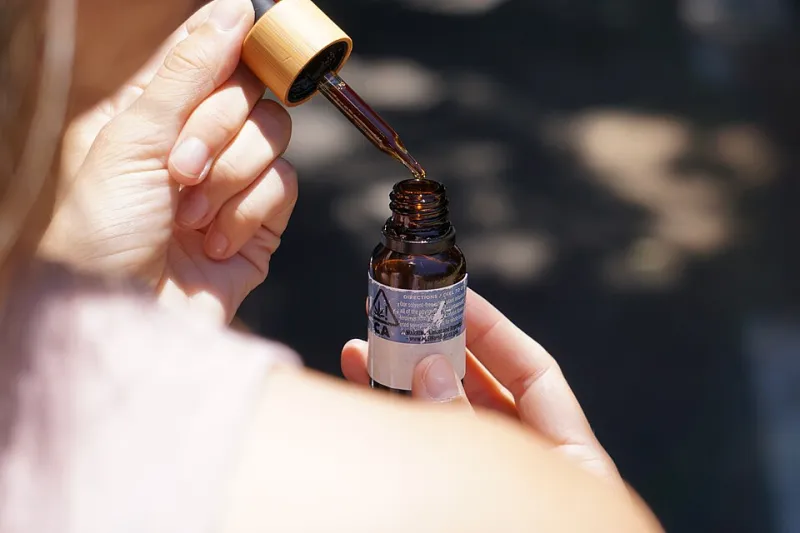
Photo: Stonesynergyimages, CC BY-SA 4.0, via Wikimedia Commons
A cupboard is not a clinical plan
Most people do not keep CBD in a laboratory. They keep it in a kitchen cupboard, a bedroom drawer or a bathroom cabinet, next to the things they already take: a multivitamin, a magnesium powder, a herbal tea, perhaps an iron supplement prescribed by a GP or a vitamin D capsule bought on a grey afternoon in February. The result is not automatically risky, but it is worth treating with more care than a casual glance at two labels.
CBD products are sold in the UK as food supplements or cosmetic products, not as medicines. That distinction matters. It means the evidence base is uneven, the law is specific, and the responsibility for sensible use sits largely with the consumer. When CBD shares shelf space with other supplements, the useful question is not whether everything is 'natural'. It is whether the products overlap, whether the timing is sensible, and whether anything on either label deserves a conversation with a pharmacist.
'Natural' is a category, not a safety guarantee
Herbal does not mean harmless, and supplement does not mean interaction-free. Many familiar products have real effects. St John's wort is the classic example: it is known to affect how some medicines are processed in the body, which is why pharmacists routinely ask about it. Magnesium can affect absorption of some medicines when taken at the same time. High doses of certain vitamins are not simply expelled; some accumulate. Even a strong cup of a herbal tea can matter if it is drunk in quantity alongside other products.
CBD is not exempt from this logic. Research on CBD interactions is still developing, but it is already clear that CBD can influence liver enzymes involved in metabolising some medicines. The effect depends on dose, formulation, frequency and the individual. This does not mean every CBD user will experience a problem. It does mean that a calm, label-aware approach is more useful than assuming that a plant-derived product is automatically neutral.
Read the CBD label for what it actually declares
A reputable CBD label should tell you the amount of CBD per serving and per bottle, the carrier oil, any flavourings or added ingredients, batch information and a best-before date. In the UK, consumers can also check whether a product appears on the Food Standards Agency's novel food register. As of 2026, that register remains a useful starting point for verifying whether a product has been through the expected authorisation route, though it is not a guarantee of quality or suitability for every individual.
Look closely at the serving size. A bottle may say '1,000mg CBD' in large type, but the label should make clear how many milligrams are in a single drop, spray or capsule. Compare that with how much you actually use. Read the ingredients list for other active botanicals, sweeteners, preservatives or carrier oils that may not suit you. If the label is vague about CBD content, or presents 'full spectrum' as a substitute for clear numbers, treat that as a reason for caution rather than reassurance.
Read the supplement label with the same discipline
Multivitamins and mineral supplements are often treated as background noise, but they have labels worth reading. Check the nutrient forms and amounts, especially if you take more than one product. A general multivitamin plus a separate B-complex plus a vitamin D capsule can create overlap. Some people take magnesium for sleep, iron for fatigue and a herbal blend for stress, then add CBD without reviewing the whole set.
Look for added ingredients that may be relevant to you: caffeine in a 'focus' blend, stimulant herbs in an energy supplement, or high-dose niacin that can cause flushing. Check whether a product is meant to be taken with food, away from other medicines, or at a particular time of day. These details are not glamorous, but they are the practical content of label reading.
The timing question is usually the first practical question
When two products are taken together, timing can matter. Some minerals compete for absorption. Some supplements are better tolerated with food. CBD may be taken in the evening by one person and in the morning by another, and the choice is often about routine rather than proof. A sensible starting point is to separate CBD from other supplements by a margin you can remember, and to keep the routine stable enough to observe.
Do not create a complicated schedule you cannot follow. A simple note is enough: what you take, how much, and when. If you are taking a prescribed medicine, the timing question becomes more important, and a pharmacist is the right person to ask. They can review the whole list, including over-the-counter products and herbal teas, and flag anything that deserves a closer look.
Questions worth taking to a pharmacist
A short, specific list makes the conversation easier. Ask whether any product on your shelf is known to affect the way your prescribed medicines are processed. Ask whether the mineral or vitamin doses overlap. Ask whether the timing you have chosen is sensible. Ask whether a CBD product's label is clear enough to confirm its CBD content per serving. Ask whether any herbal ingredient, such as St John's wort, should prompt a check with your GP.
You do not need to arrive with a theory. 'I take these products, in these amounts, at these times; is there anything here that should be reviewed?' is a perfectly good opening. Pharmacists are used to these conversations, and they are often the most accessible source of calm, practical advice in the UK.
Keep the focus on observation, not expectation
If you decide to use CBD alongside everyday supplements, change one thing at a time where possible. Keep a brief record for a few weeks: sleep, appetite, mood, digestion, any unusual symptoms. This is not a clinical trial, and it will not prove cause and effect. It is simply a way of noticing patterns instead of relying on memory.
Stop and seek advice if you experience symptoms that concern you, especially if they are new or persistent. CBD is not a substitute for medical care, and a supplement shelf is not a treatment plan. The aim is not to build a perfect regimen. It is to read labels honestly, ask sensible questions, and keep the cupboard in proportion.